Authenticity comes from choices, not secrets
I hesitated with my thumb over the “Skip the line: Hidden Local Gem” ticket—$38, nonrefundable, 9:15 a.m. entry, and a meeting point two metro transfers away from my hotel. The reviews promised a secret door and “no tourists,” which immediately felt like a sales pitch. I closed the tab and walked to the corner bakery instead, where the only decision was whether the almond croissant was worth getting powdered sugar on my shirt before noon.
Authenticity isn’t a password you earn; it’s the accumulated result of small choices you make in public. Sitting down for a late lunch when the office crowd does will show you more daily life than chasing a rooftop “locals-only” bar that still requires a reservation link in someone’s bio. You’ll blend in more by being predictable (cash ready, quick order, polite distance), but you’ll sacrifice the adrenaline of “discovering” something rare.
This works best if you’re mid-budget and moving city-to-city with limited time: pick routines over quests. Spend your money where the service is boringly competent—busy cafés, transit-connected neighborhoods, markets that close on schedule—because that’s where locals are, not where they’re being performed for. If you want one “special” experience, make it a practical one (a neighborhood food tour, a cooking class) with clear boundaries, not a mystery meetup that can’t explain where you’re going.
Redefine what “local” really means
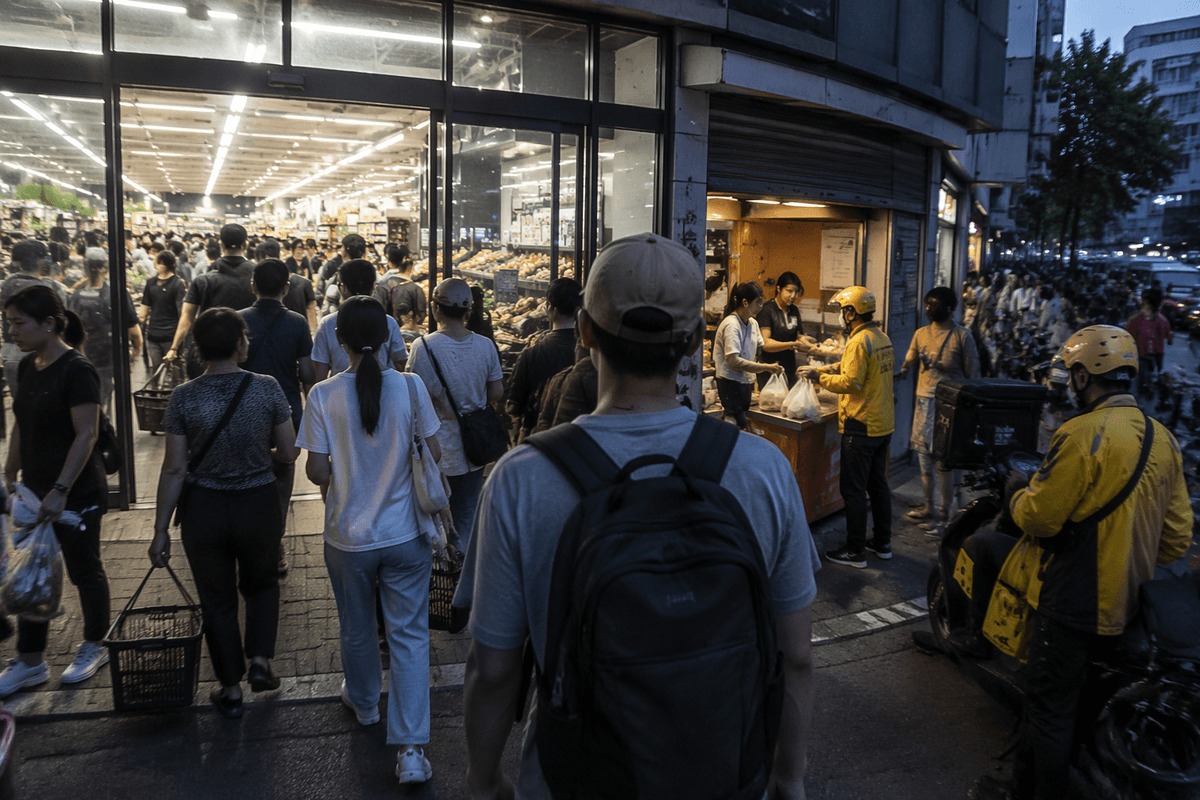
At 6:42 p.m. I followed my saved pins into a “local neighborhood” and immediately hit the mismatch: the cute alley café was shuttered, chairs stacked, while the loudest line on the block was for a pharmacy and a takeout window with a blinking number dispenser. My map said “vibes”; the street said “errands.” I stood there with my phone dimming, weighing whether to keep hunting or just join the queue like everyone else.
“Local” usually isn’t a place—it’s a time slot and a purpose. The café that looks cinematic at 11 a.m. can be irrelevant at 7 p.m., and the most “real” stop might be the boring one: the supermarket at after-work rush, the dumpling shop doing nonstop delivery pickups, the corner bar that’s half soccer on TV and half people decompressing. For a solo traveler, that’s a safer kind of authenticity: you’re not intruding on private life, you’re sharing public routines.
So redefine “local” as: where people spend money without making a night of it. Aim for lunch specials near offices, Sunday markets with closing-time discounts, neighborhood gyms with day passes, laundromats next to snack stands. If a spot only makes sense with a reservation link, an influencer caption, or a “DM for address,” it might still be fun—just don’t confuse friction with truth.
Pick places where locals actually spend time
At 12:27 p.m. I hovered outside a glossy “traditional” restaurant with a host stand and laminated photos, then noticed the office crowd cutting diagonally across the street toward a cramped canteen with steam-fogged windows. The menu was half language I didn’t know, half numbers, and nobody lingered for the perfect table. I followed the flow, ordered by pointing like a beginner, and got fed faster than my map could refresh.
Places locals actually use tend to optimize for repetition, not discovery: lunch counters near workplaces, market halls where people buy dinner on the way home, parks with parents doing the same loop, bookstores with a café that’s more quiet than cute. You’ll trade “wow” interiors for fluorescent lighting and chairs built for turnover—but you gain a kind of safety through normality: clear prices, busy staff, lots of witnesses, and an exit that isn’t a mystery.
If you have one free evening and low patience for awkwardness, pick the spots that don’t require social permission: a neighborhood cinema, a public bath/sauna (where it’s common), a food court attached to transit, a weekend flea or farmers’ market before closing. Go early enough to watch the rhythm start, not late enough to feel like you’re crashing it. When a place seems designed for photos more than function, I treat it like dessert—fine, just not where I spend the whole meal.
Turn brief encounters into real connection
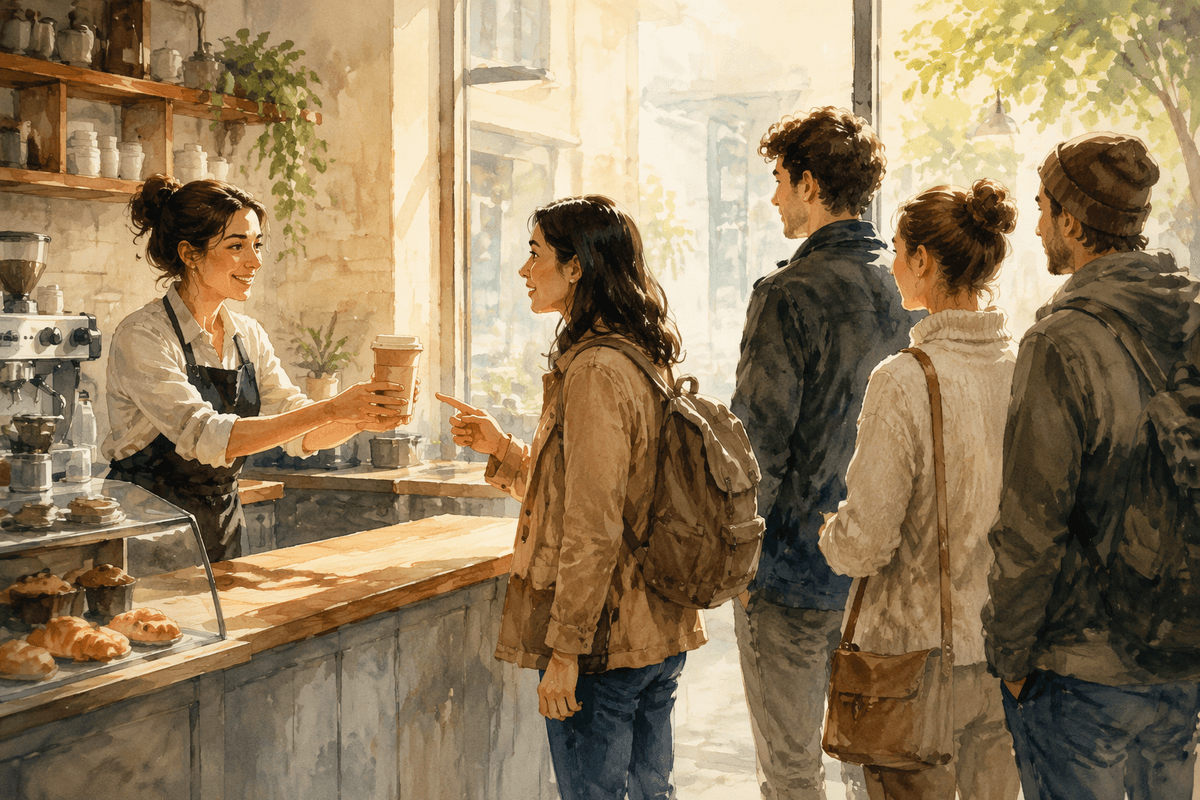
At 9:58 p.m. I was paying for a bowl of noodles with coins I hadn’t fully decoded when the cashier asked something I didn’t catch—twice. The guy behind me sighed, then switched to slow, simple English to translate, and I felt my face heat up in a way that had nothing to do with the broth. I could’ve fled with a polite smile, but I stayed long enough to say thank you properly and ask what the question had been.
That’s the move: treat tiny interactions like they matter, without trying to turn them into a “moment.” A two-minute chat with a barista can feel more real than a three-hour “meet locals” event, mostly because the barista still has a job to do and you’re fitting into their day, not stealing it. You’ll be the beginner a lot—so keep it lightweight: ask one specific question (what people order here, what time it gets busy), tip or pay correctly, then let the line keep moving.
If you want a connection that survives beyond the receipt, pick repeatable places and show up twice. A morning bakery, the same lunch counter, a small gym class, a neighborhood record shop—anywhere staff recognize faces faster than names. It works best for solo travelers who can handle a little awkwardness and leave before fatigue turns you quiet; it works poorly when you’re chasing late-night scenes or “secret” bars that depend on gatekeeping. When it clicks, you’ll feel it in the simplest way: you stop performing interest and start having a normal, human exchange.
The simplest “authentic day” I’d plan
At 7:35 a.m. I checked my watch outside a bakery with three stools and a short line that moved like everyone had a train to catch. I had a museum ticket window at 11:00 and a low battery warning I didn’t want to negotiate later. Instead of chasing a “must-try” across town, I ordered what the person in front of me got, ate standing up, and let the day start on local timing, not my saved pins.
I’d build the simplest authentic day around two anchors and everything else as street-level choice. Anchor one: a practical morning errand that locals actually do—bakery, market, laundromat café—within a 20-minute walk so you’re not spending your best energy on transfers. Anchor two: one pre-booked, bounded thing in the afternoon (a cooking class, neighborhood tour, small museum) that keeps you from doom-scrolling options at 2 p.m.; the trade-off is less spontaneity, but fewer dead zones when you’re hungry and tired.
Then I’d keep the evening deliberately normal: an early dinner near where you’ll sleep, ideally somewhere busy enough that nobody cares you’re solo, followed by a park loop or a cheap cinema instead of “finding nightlife.” It’s not for someone chasing scenes or flirting with risk, and it won’t produce a cinematic story every time. Still, if you end the day knowing how people commute, eat, and unwind here—and you did it without forcing intimacy—that’s the kind of authentic that tends to stick.