Why watermelon feels unusually hydrating in the body
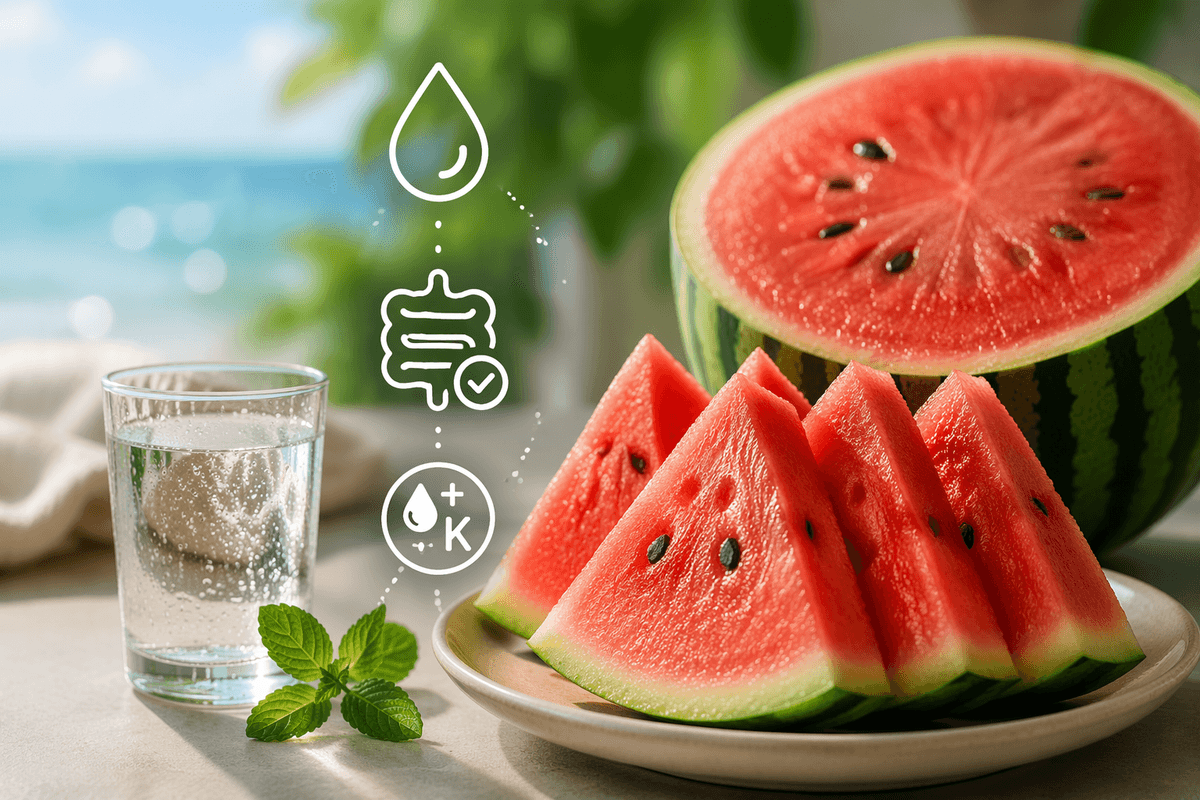
It’s often the first few bites that give it away: your mouth feels less sticky, and the “need water” feeling quiets down a notch even before you’ve finished the bowl. Watermelon can do that because it’s mostly water held inside crisp cells, so you’re not just sipping fluid—you’re chewing it, swallowing it gradually, and spreading it through your gut a little more slowly than a fast drink.
In hot weather or after a salty meal, the body tends to hang onto water, and you may notice you’re thirstier, a bit puffier, or slightly backed up. Watermelon adds volume without heaviness, and that extra water can help keep the contents of the gut from drying out. The small amount of soft fiber also gives that water something to “stick” to as it moves along, which may make stool feel less dense over the next day.
Still, the effect isn’t perfectly predictable. If you’ve been sitting for hours, sweating, or under-drinking all day, watermelon can feel like instant relief—yet if you eat a lot at once, the sheer volume can stretch the stomach and make you feel oddly full or sloshy. That mix of lightness and slight pressure is usually just the body reacting to water arriving quickly in a tight space.
Water plus potassium: a gentler electrolyte pattern
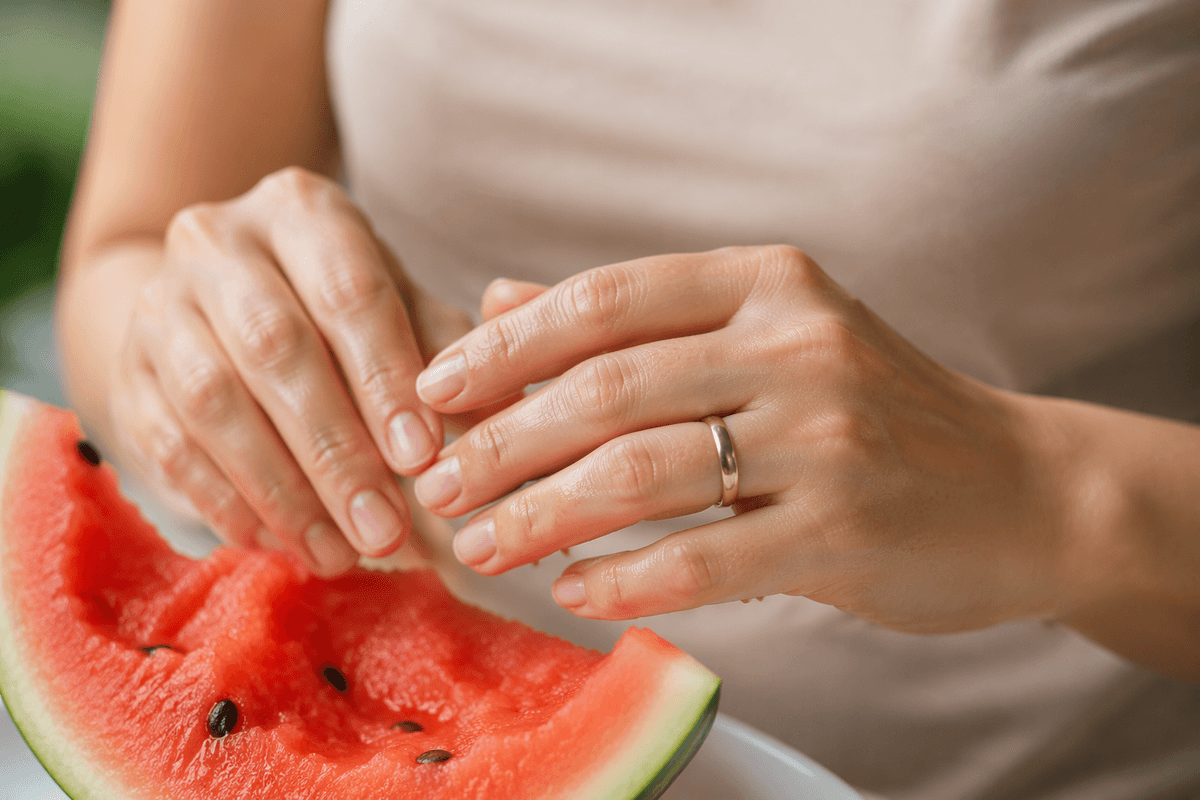
Sometimes you notice it later, not in your mouth but in your hands: rings feel a little less tight, or that salty “draggy” feeling eases. That’s often when people assume watermelon is acting like a sports drink. It isn’t, exactly—but it can still feel balancing.
Along with water, watermelon brings a modest amount of potassium. Potassium is one of the minerals that helps the body manage fluid shifts between tissues and the bloodstream, especially when sodium has been high. In that situation, plain water can sometimes feel like it just “sits there,” while water paired with a little potassium may feel easier to absorb and use.
It’s not a guaranteed effect. If you’ve been sweating heavily, traveling, or eating very salty foods for days, the mineral gap can be bigger than fruit can cover. But as a snack, it can nudge things toward “less parched, less puffy” without feeling harsh or heavy.
Digestive ease from water, volume, and soft fiber
You usually notice it when you stand up later: there’s a little less pressure low in the belly, and the next bathroom trip feels less like “work.” People often credit the sweetness, but the more practical piece is texture—watermelon is mostly water, and the bits of soft fiber give that water something to travel with instead of draining away and leaving drier material behind.
When fluids run low, the gut can pull water out of what’s inside it, simply because the body is trying to protect blood volume and temperature. Over a day or two—especially with heat, long sitting, or salty meals—stool can get denser and movement can feel slower. A watery fruit adds bulk that’s not gritty or scratchy, so it may soften the “traffic” without the feeling some higher-fiber foods create.
But it doesn’t behave like a tidy on/off switch. If you eat it fast or in a big bowl, the volume can distend the stomach, and the extra fluid can move into the small intestine quickly. In some people that shift feels like gurgling or mild gas, even though the same fruit in a smaller portion feels calm and light.
When a hydrating food unexpectedly causes bloating
It can be confusing when something that feels “watery” still leaves you with a rounded, tight stomach. The bowl looks light, you finish it, and then the waistband suddenly feels less forgiving. That shift often isn’t true heaviness—more like the gut reacting to quick volume and rapid movement.
Watermelon’s water doesn’t always linger in the stomach. In a larger portion, it can pass along quickly, bringing sugars and fluid into the small intestine at the same time. If that mix pulls in extra water or meets slower digestion from heat, travel, or a salty meal, you may feel gurgling, pressure, or more gas than expected.
There’s also a simple mismatch people don’t anticipate: watermelon is high in water but relatively low in firm, “gripping” fiber. If the rest of the day has been dry snacks, long sitting, or under-drinking, the gut can still be behind on steady hydration, so the sudden flood feels like slosh, not smooth relief.
Portion size changes digestion more than people expect
Sometimes the mistake is thinking “it’s just fruit,” so the bowl size shouldn’t matter. But with watermelon, the jump from a few slices to a piled-up serving changes what your gut has to physically handle: more liquid volume arriving quickly, more stretch in the stomach, and more movement downstream at once.
A smaller portion can feel almost like it disappears—enough water to moisten what’s already in the digestive tract, with a little soft fiber to carry it along. A much larger portion may do something different: it can dilute stomach contents, speed emptying for some people, and send a bigger wave of water plus sugars into the small intestine. That can pull in extra fluid and make the belly feel louder, puffier, or more gassy.
It’s also why the same person can have opposite results on different days. If you’re already a bit dry from heat, travel, or salty meals, a huge serving can feel “sloshing” instead of steady—less about the watermelon itself, more about the pace and amount hitting a system that’s been running low.
How watermelon fits with meals and activity levels
You notice the difference most when watermelon lands on top of something salty or heavy: a sandwich, chips, airport food. The fruit can feel like it “thins out” that meal, not by canceling it, but by adding water into a mix that would otherwise sit thicker and drier in the gut.
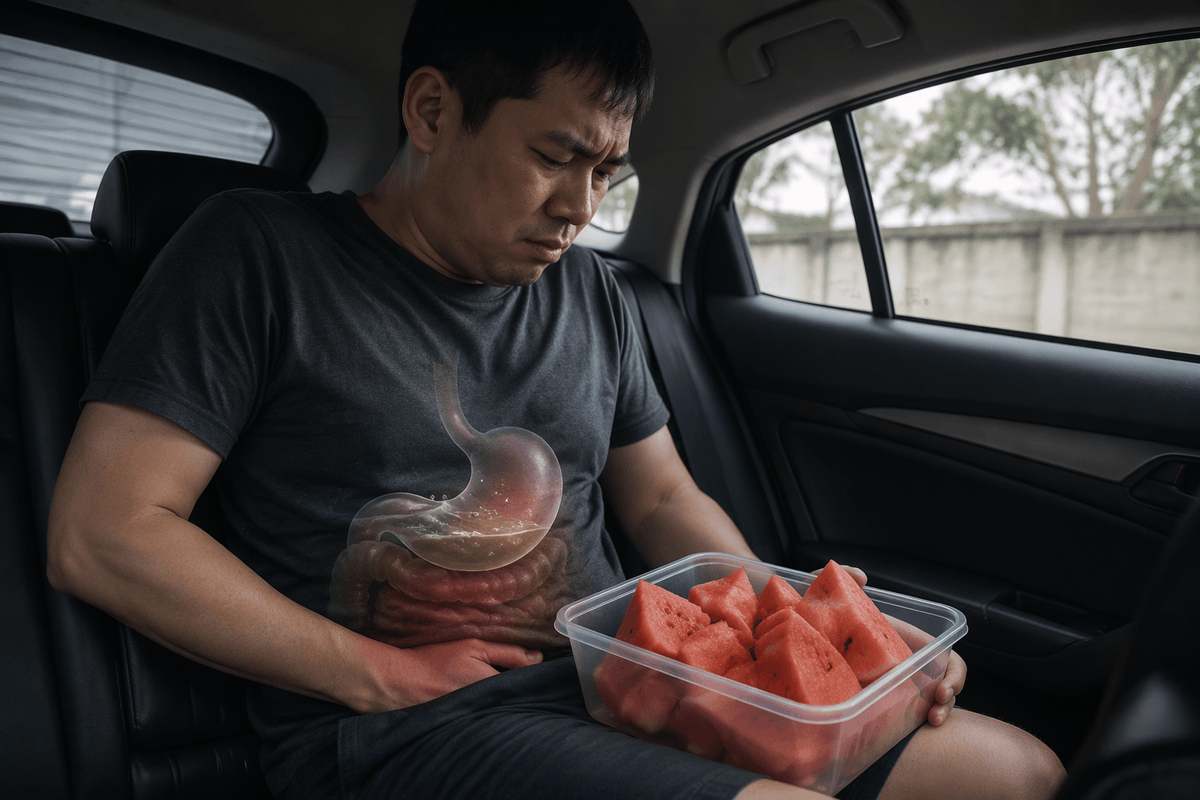
But the same slices can feel less friendly when you’re still, hunched in a car seat, or sitting through meetings. Movement helps the digestive tract keep a steady rhythm, and without it, a big watery serving may pool and shift—more gurgle than glide—especially if the meal already slowed things down.
After light activity, watermelon often feels smoother because the fluid has somewhere to go and the soft fiber has time to travel with it. After long sitting, it may just highlight how “paused” your system already is.
Practical cues your body gives after watermelon
A little later, you might catch yourself peeing sooner than expected, or noticing your mouth isn’t as tacky. That’s often a sign the water in the fruit is moving through without much resistance. If the next day’s bathroom trip feels easier—less straining, less “brick-like” stool—that usually points to a simple shift: more water stayed with what was already in the gut, and the soft fiber helped it hold together instead of drying out.
Other cues can be noisier. If your belly gets loud, you feel a sloshy fullness, or your waistband feels tighter, it may be less about “not tolerating” watermelon and more about timing and load—too much volume arriving quickly, especially after salty food, in heat, or after long sitting. In that setup, fluid and sugars can move into the small intestine in a rush, pulling in extra water and making pressure feel bigger than the snack looked.
Both patterns can be true in the same person. A few slices can feel like a reset, while a large bowl can feel like sudden bloat, simply because the body was already conserving water and running slow. When the reaction keeps flipping, the most useful cue is consistency: how often the same portion in the same context leaves you lighter versus louder.