Why Costa Rica works for family travel
The first time I priced out Costa Rica for a family of four, I hesitated at the total—flights plus tours can look steep compared with “easy” beach countries. But what you’re really buying is density: in a single 7–10 day trip you can get legitimate wildlife, warm-water beaches, and a bit of zip-line-level adventure without committing to long domestic flights or constant hotel hopping.
It works well for kids because the payoff shows up quickly. You can see monkeys before breakfast in places like Manuel Antonio, or spot sloths and toucans with a short guide walk near Arenal—no all-day safari vibe required. The constraint is that nature runs on nature’s schedule: wildlife isn’t guaranteed, and midday heat can shorten everyone’s patience, so early starts matter more here than they would on a pure beach trip.
Logistics are also more predictable than they look—tour operators are used to families, and many activities are half-day sized. The friction point is roads: distances on a map lie, and rainy season can stretch drives and make “one more region” feel like work. Costa Rica rewards choosing fewer bases and letting the days breathe.
Choose your home base: beach, rainforest, or both
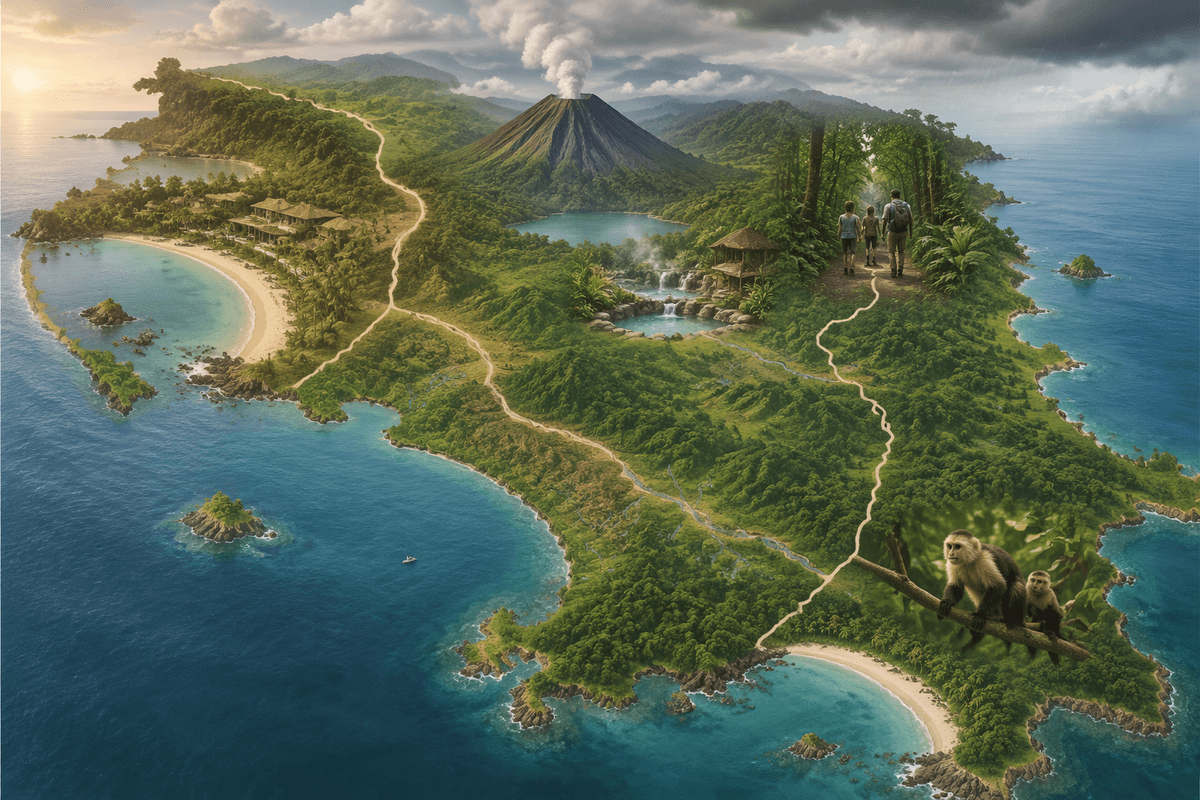
On my first Costa Rica family draft itinerary, I kept trying to “just add” Monteverde on top of Arenal and a beach—until I actually mapped the drive times and realized the roads were the real itinerary. If you’re traveling with kids, the home-base decision isn’t about what looks coolest on Instagram; it’s about what you want to do most days before lunch, because that’s when energy (and weather) cooperates.
If wildlife is the headline and you want easy half-days, Arenal tends to behave like a family-friendly hub: short hikes, hot springs to “buy back” cranky legs, and lots of operators who can scale adventure up or down. Monteverde can feel more special for cloud forest, but it’s also more effort—windy, cooler, and the access roads can be slow enough that one night there often turns into two just to make it worth the move. For beaches, Manuel Antonio gives you the simplest monkey-and-beach combo, but you pay in crowds and higher lodging costs; Guanacaste is smoother for resort-style logistics and calmer driving, yet wildlife can feel more “planned” (tours) than incidental.
For 7–10 days, the lowest-friction “both” plan is two bases: 3–4 nights Arenal + 4–5 nights one beach (Manuel Antonio for maximum nature, Guanacaste for maximum ease). In rainy season, I’d book the longer beach stretch second—those slower afternoons handle showers better—then lock in hotels and any must-do guides early, because the family-sized rooms and the best morning slots go first.
Top kid-friendly activities without overpacking the days
The moment that finally kept our days from turning into a checklist was admitting that Costa Rica is a “one anchor activity” country—especially with kids. Pick one real outing for the morning (when animals move and heat hasn’t flattened everyone), then leave the afternoon intentionally loose for pool/beach, naps, or a second mini-thing you can abandon without guilt. It sounds conservative on paper, but it’s the difference between a fun zipline story and a cranky car ride to “make the timing work.”
In Arenal, the most reliably kid-friendly trio is: a guided wildlife walk (short, early, higher odds of seeing something), hanging bridges (feels adventurous without being intense), and hot springs (the easiest way to cash out tired legs). The constraint is cost—guides and hot springs add up—so if you need to trim, keep the guide and swap the hot springs day for a free river swim spot or an easy trail. Ziplining is the “big” adventure, but it’s also the one most sensitive to weather and nerves; booking it early in your Arenal stay gives you reschedule room if rain rolls in.
On the beach side, I’d bias toward mornings inside the park (Manuel Antonio) or on the water (a calm snorkel/boat trip), then protect afternoons for sand time because that’s when the sky tends to get moody in rainy season. Manuel Antonio’s big limitation is crowd timing—if you arrive late, you’ll feel it—so reserving an early entry/guide slot is worth more than adding a second tour. In Guanacaste, the trade is that wildlife often becomes an “activity” (boat safari, estuary tour) rather than a surprise; it’s smoother for logistics, but you’ll want to choose one nature excursion on purpose so the trip doesn’t become only beach-and-pool by day four.
Where to stay: resorts, eco-lodges, or rentals
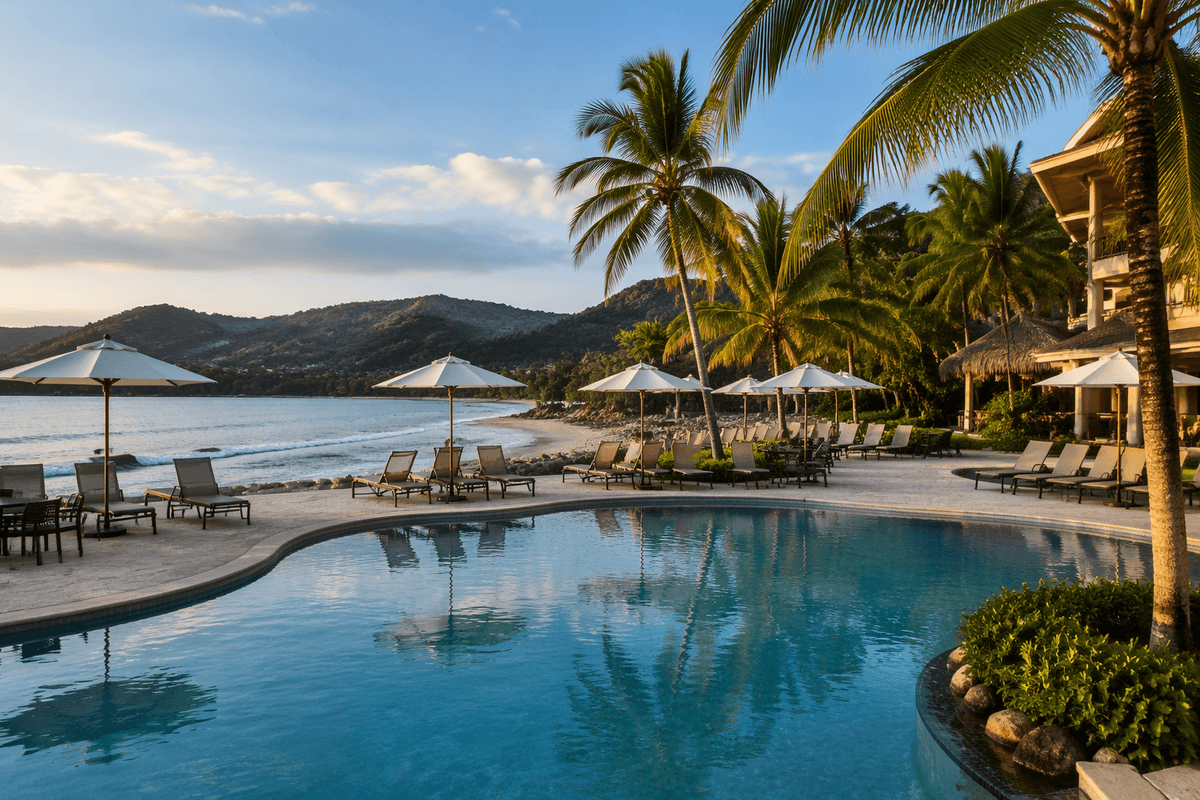
I learned the hard way that where you sleep in Costa Rica determines how much “Costa Rica” you actually experience—because a gorgeous room 35 minutes down a potholed road effectively turns every morning into a negotiation. For families, I’d start by choosing your friction: do you want meals handled (resort), nature built-in (eco-lodge), or space and a fridge (rental)? All three can work on a mid-range budget, but only if you’re honest about how often you’ll want to leave the property after 3 p.m. when rain, traffic, or tired legs show up.
Resorts shine in Guanacaste and parts of Manuel Antonio when you want the simplest days: predictable pools, easy food, and fewer “what’s open?” moments. The catch is that you can pay for convenience twice—once in nightly rate, and again in excursions because the best wildlife is often off-property. Eco-lodges do the opposite: they’re strongest around Arenal (and some pockets near Manuel Antonio) where trails, frogs, birds, and night walks can happen without a car ride. They’re not always kid-proof, though—steep paths, open-air rooms, and earlier quiet hours can be either charming or stressful depending on your crew.
Rentals are the sweet spot if you want room to spread out and control food costs, especially with picky eaters. The limitation is logistics: you’re now managing keys, groceries, and the “where do we eat tonight?” question when a storm hits. If you go the rental route, I’d prioritize walkability (beach access or a town with 2–3 reliable restaurants) over a remote view—because in rainy season, that view can come with a daily drive you’ll resent by day three.
Getting around and staying safe with kids
Our first big “should we drive?” moment happened before we even landed: I mapped Arenal to the beach and realized the mileage was irrelevant—slow two-lane roads, towns, and weather were going to set the pace. If you want the simplest logistics with kids, a private shuttle between bases is the low-stress winner: door-to-door, no parking puzzles, and nobody gets carsick from white-knuckle passing. It does cost more than DIY, and you lose the freedom to detour, but for a two-base trip it often feels like money well spent.
If you do rent a car, plan like you’re driving in daylight-only mode—because you basically are. Night driving is doable, but it’s where families get taxed: signage can be inconsistent, rain can drop visibility fast, and a “two-hour drive” can quietly become four if there’s a backup or roadwork. A higher-clearance vehicle helps on rougher access roads (some Arenal/Monteverde-area lodging roads can be bumpy), but it’s not a magic fix; I’d rather pay for a more central location than over-invest in a tougher car and still burn time on approach roads.
Safety is mostly about avoiding preventable headaches. Keep bags out of sight in the car, don’t leave phones on the beach while you swim, and assume anything visible is “interesting.” For kids specifically, the bigger real-world risks are nature and water: don’t let them trail-run on wet paths, respect posted beach flags (some stretches have strong currents), and treat wildlife like a look-don’t-touch exhibit—even the cute stuff. The goal isn’t to be anxious; it’s to keep your attention for the fun parts instead of solving problems mid-trip.
The simplest plan for a stress-light family trip
The plan that kept our trip feeling like a vacation (not a logistics exercise) was committing to two bases and treating every transfer day like a real event. Three to four nights in Arenal, then four to five nights at one beach, with a shuttle or daylight-only drive. You give up the bragging-rights loop, but you stop paying the “packing tax” every other morning.
On regular days, we worked in a simple rhythm: one morning anchor (guide walk, bridges, park time, a boat) and a deliberately unambitious afternoon. It sounds like under-planning until you hit a humid day or a rainy-season downpour and realize you’ve built in permission to bail without the day collapsing. The only “rule” was booking the big-ticket morning things early in the stay so weather had room to cooperate.
If you want one decision cue: choose Manuel Antonio if you want wildlife to happen almost accidentally, choose Guanacaste if you want the easiest beach logistics, and keep the rest of the itinerary boring on purpose. Costa Rica rewards families who leave space for the moment everyone’s energy surprises you—in either direction.