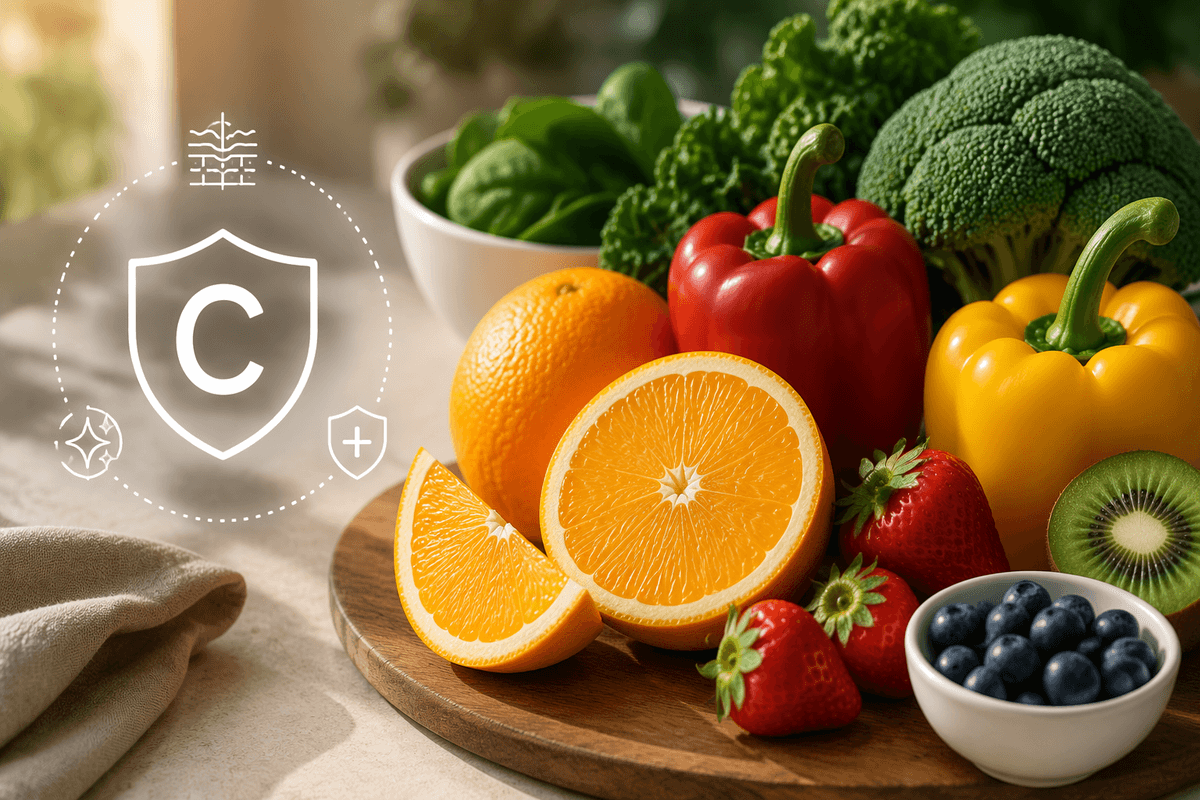
Why vitamin C seemed like an easy longevity lever
It often starts with something small: a nick that seems to linger, gums that feel a bit touchier when you brush, or that “why do I feel so worn down?” sensation after a week of short sleep and convenience meals. Vitamin C ends up on people’s radar because it sounds like a simple fix—one nutrient, one bottle, and you’re back on track.
The idea isn’t completely random. Vitamin C is tied to collagen upkeep (the scaffolding in skin, blood vessels, tendons, and gums) and it helps recycle other antioxidants in the body. So when intake runs low for a long stretch, it may feel like your usual repair-and-recover capacity has less slack—especially when life adds extra strain.
What makes it feel like an “easy lever” is that low intake is common and quiet. If most days are light on produce, and the vegetables you do get are cooked, stored, or limited to a couple repeat options, the gap can build without an obvious warning sign—until the body has less buffer to work with.
What “low intake” looks like in real diets

It can look like a pretty normal week: coffee and a bar in the morning, a sandwich or drive-thru at lunch, and something microwaved for dinner. Nothing screams “deficiency,” especially if there’s a token side of lettuce or a few tomato slices. But vitamin C doesn’t tend to hide in breads, meats, cheeses, or most packaged staples—so the total can stay low without you noticing.
Even when vegetables show up, the details matter. Produce that’s been sitting in the fridge for days, a routine of well-cooked frozen meals, or sticking to the same two vegetables can quietly shrink the vitamin C you actually get. In some households it turns into an honest misunderstanding: “I eat vegetables,” meaning a daily cooked serving, while the body’s supply still runs thin over months.
What people often feel isn’t dramatic—more like less bounce after a cold, tenderness around gums that comes and goes, or skin that seems to mark and heal a little slower. Those changes can have lots of causes, but long stretches of low produce intake are one practical piece of the picture.
Signals researchers saw in aging-related health measures
Sometimes it shows up in the numbers before it feels like a “vitamin” issue: a routine lab that hints at more inflammation than you expected, or a sense that small setbacks—an achy week, a dental cleaning, a winter bug—take longer to shake.
In research, low vitamin C intake (or low blood levels) has often lined up with aging-adjacent measures like higher oxidative stress and inflammatory markers, and with less favorable physical function in some groups. That doesn’t mean vitamin C is the only driver. But it fits the role it plays: it helps keep connective tissue maintained and supports antioxidant buffering, so when the supply stays low, normal wear-and-tear may get more “expensive” for the body to handle.
Slower recovery, easy bruising, gum sensitivity, and feeling run-down can also track with sleep debt, medications, stress, smoking history, or overall low diet quality—so vitamin C is better viewed as one quiet clue in a crowded picture.
Why low vitamin C often clusters with other risks
It’s easy to blame the “off” feeling on age, especially when the day-to-day explanation sounds more convincing: you’ve been busy, you’ve been eating whatever’s quick, and you’ll get back to “better” next week. But low vitamin C rarely travels alone in that kind of routine. The same pattern that cuts out citrus, peppers, and fresh fruit often comes with fewer minerals and plant compounds overall, plus more ultra-processed foods that don’t do much for antioxidant reserves.
That’s where the clustering starts to matter. Smoking (even a long-ago habit), higher ongoing inflammation, and frequent alcohol can all increase oxidative wear, while low produce intake reduces the buffering capacity that helps manage it. Meanwhile, collagen maintenance still depends on having enough building blocks and support nutrients—so if protein is inconsistent, or if you’re also low on things like folate or vitamin E, the body may feel like it has less “repair budget” to spread around.
A tender gumline, slower skin recovery, or lingering soreness can reflect stress, sleep, medications, or dental issues—and vitamin C can only be one part of that mix. The pattern becomes more useful than any single symptom: long stretches of low produce plus other hits to recovery can add up quietly.
How the body’s needs shift with age
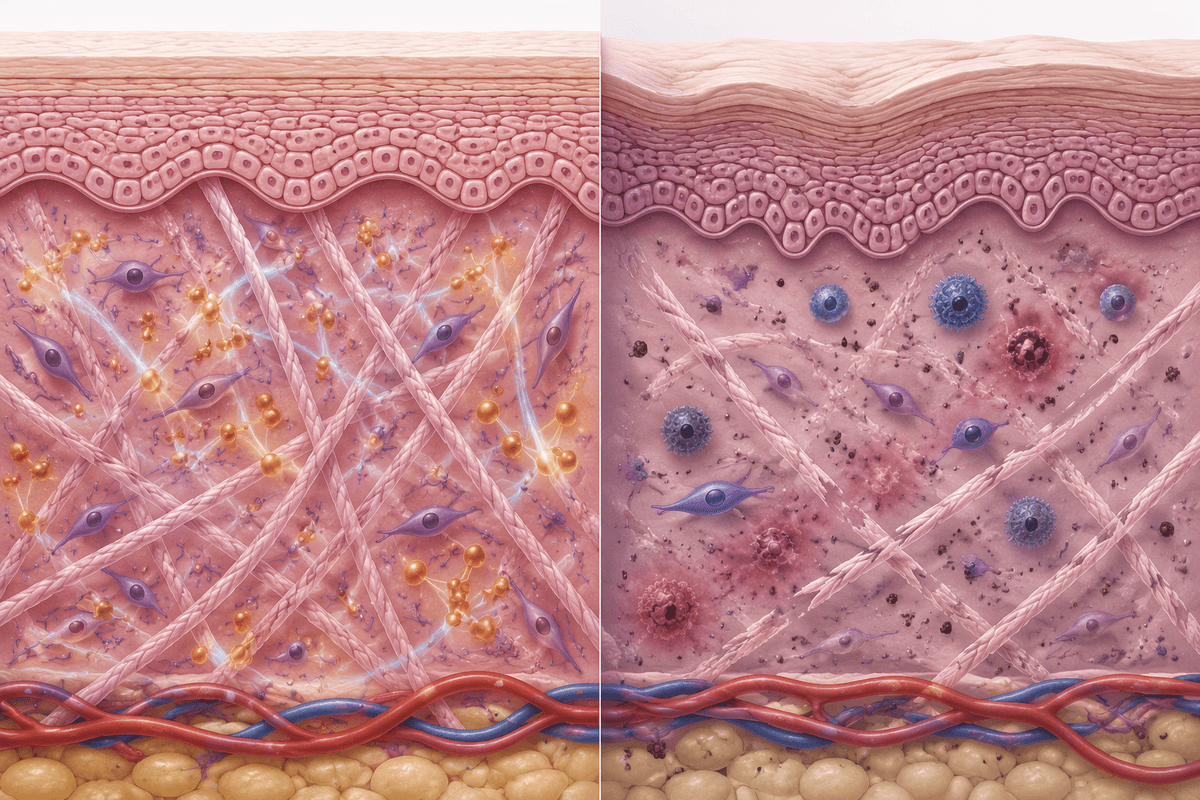
You might notice it most after something minor: a dental cleaning that leaves your gums feeling raw for a day longer than you expected, or a small scrape that seems to stay “pink” forever. It can feel like your body is doing the same work it always did—just with less spare capacity.
Part of that is that aging bodies often run closer to their limits. Skin and connective tissue turnover can slow, and everyday inflammation may sit a little higher in the background. When that’s the baseline, nutrients that support repair and antioxidant buffering don’t necessarily need to be “more important” than they were before—they just have less room to be inconsistent. Vitamin C is one of the inputs collagen work depends on, and it also gets used up helping manage oxidative stress, so low intake can matter more when life is already adding friction.
This is where people get tripped up: the diet hasn’t changed much, but the response has. A routine of reheated meals, long-stored produce, and the same few vegetables can keep vitamin C hovering at “barely there,” and the body may simply stop covering for it as easily as it did at 35.
Food, supplements, and the mismatch people notice
It often hits at the kitchen counter, not the doctor’s office: you add a multivitamin “just in case,” but you’re still not feeling that snap-back after a rough week. That’s the mismatch people notice—supplements feel like they should erase the problem, while the day-to-day signals (tender gums, skin that seems to take its time, a longer slump after a cold) don’t always budge.
Vitamin C from food tends to arrive packaged with other helpful pieces—potassium, folate, fiber, and a wider spread of plant compounds—while a pill is usually one isolated input. And the food pattern matters: if most vitamin C is coming from vegetables that are routinely cooked hard, held warm, or eaten after long storage, the “I eat vegetables” story can be true while the actual vitamin C supply stays modest.
Supplements can still fill a gap, but they don’t automatically fix the bigger cluster that often rides along with low produce: low variety, inconsistent protein, higher added sugar, or habits that keep inflammation simmering. So if the body feels like it has less repair budget, vitamin C may be one lever—just not the only one.
What the evidence can and cannot justify
It’s usually after a few months of trying to “do the right thing” that the doubt creeps in: you added vitamin C, maybe even more salads, and yet your energy and recovery still feel a little unpredictable. That’s where the evidence can feel unsatisfying—because it doesn’t promise a clean before-and-after.
Research often finds that lower vitamin C intake or blood levels travel with less favorable aging-adjacent measures, but that’s not the same as proving vitamin C is the main cause of every slow-healing cut or lingering cold. People who run low on vitamin C often have other things going on at the same time—less produce overall, more ultra-processed food, smoking history, higher inflammation—so “vitamin C” can partly be a marker for the whole pattern.
What the evidence can justify is narrower: if your routine rarely includes fruits and vegetables, it’s plausible you’re missing some of the antioxidant buffering and collagen support your body relies on. What it can’t justify is treating one symptom, or one supplement, as the full explanation—especially when the signals come and go.