Why Brussels sprouts often taste bitter or bland
You cut into a Brussels sprout and the smell hits first—sharp, a little “cabbagey”—and it’s easy to assume that’s just how sprouts are. But that odor is often a cooking signal, not a personality trait. When sprouts sit in moisture (from steaming, boiling, or even a crowded pan), their sulfur compounds hang around in the trapped steam, and the flavor can tilt from pleasantly earthy to aggressively vegetal.
Bitterness shows up in a similar way: it’s naturally there, but it becomes louder when the sprout doesn’t get a chance to brown. Without dry, high heat, you mostly get softness and that green, watery taste—tender but oddly flat. It can feel like you “did everything right” because they’re cooked through, yet the payoff is missing.
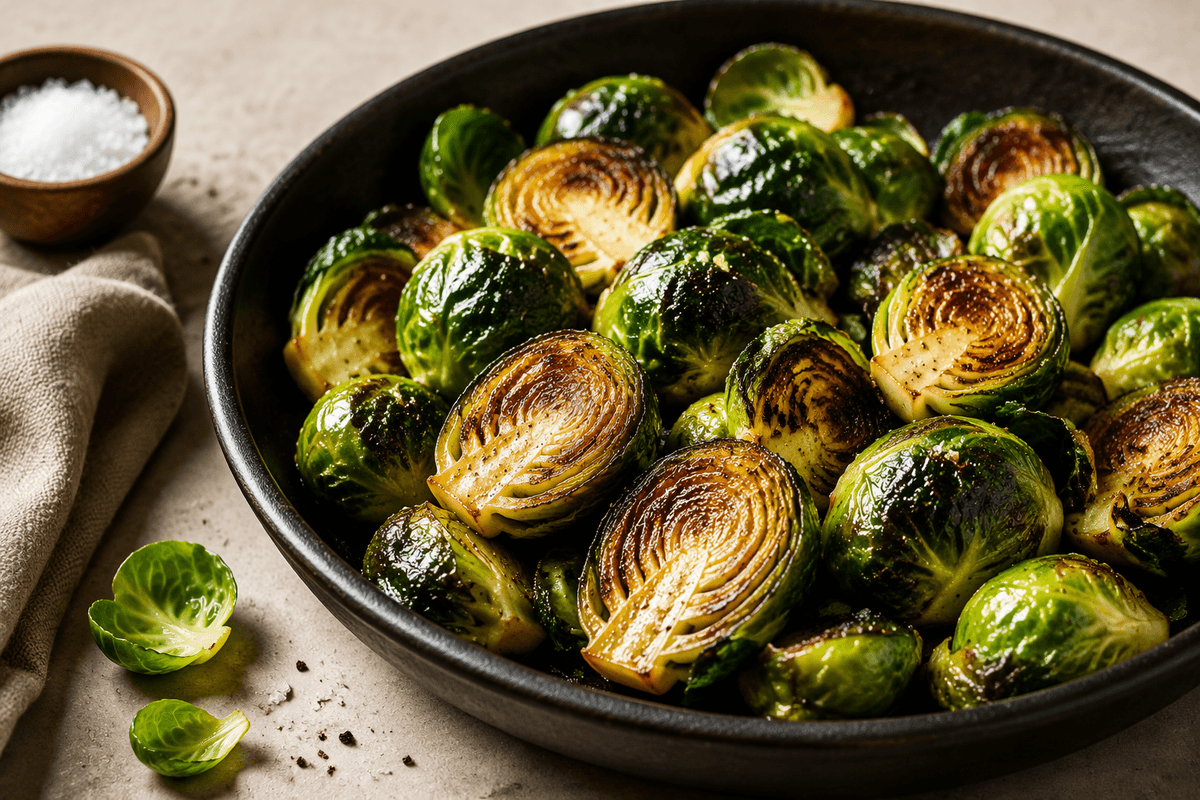
Dryness, space, and heat shift the whole pattern. When the surface moisture evaporates and the cut sides actually make contact with a hot pan, browning reactions can build sweetness and a nuttier edge that smooths bitterness. The practical tells are simple: deeper golden color, crisp edges, and an aroma that smells more toasted than steamed.
Size, freshness, and trimming change the baseline flavor
The first clue is often in your hand: two sprouts from the same bag can feel like different vegetables. The smaller ones tend to cook through fast and can tip from “cute and tender” to overdone before you get much browning. The big ones hold more water in their tight layers, so they can stay pale on the outside while the center turns soft—an easy setup for that stronger cabbage note.
Freshness quietly sets the baseline. Firmer sprouts with tight leaves usually smell clean and faintly sweet when raw; older ones can lean sulfur-forward even before they hit heat. If the outer leaves are yellowing or the cut stem looks dried out, the flavor often starts harsher and it takes more browning to round it out.
Trimming changes what can actually brown. A thick stem end can keep the layers clenched, trapping moisture like a little steam packet. Shaving just the dry nub and peeling off tired outer leaves helps the sprout open slightly, so the cut faces dry faster and the “green bitterness” doesn’t dominate the first bite.
Dry heat creates sweetness through browning reactions
You can usually hear the moment it starts working: a faint sizzle that stays steady instead of turning into that wet, shushing sound. That’s the point where the surface has finally dried off and the sprouts stop behaving like little steam bombs. When they’re still damp, the pan’s heat gets spent boiling off water, and the sprouts soften without developing much flavor.
With dry, high heat, the cut sides can actually brown. That browning isn’t just “color for looks”—it’s where some of the sharper green notes get pushed into the background and the natural sweetness comes forward. The edges turn crisp and slightly nutty, and the smell shifts from cabbagey to something more like toasted vegetables. It can feel like the bitterness disappeared, but it’s often just being balanced by deeper, warmer flavors.
One batch browns fast; the next stays pale because the sprouts were rinsed, cut too small, or crowded close enough to trap their own moisture. If the pan looks glossy with liquid and the aroma starts reading “boiled,” it’s usually a sign the browning phase never really began.
The steaming trap: tenderness without flavor payoff
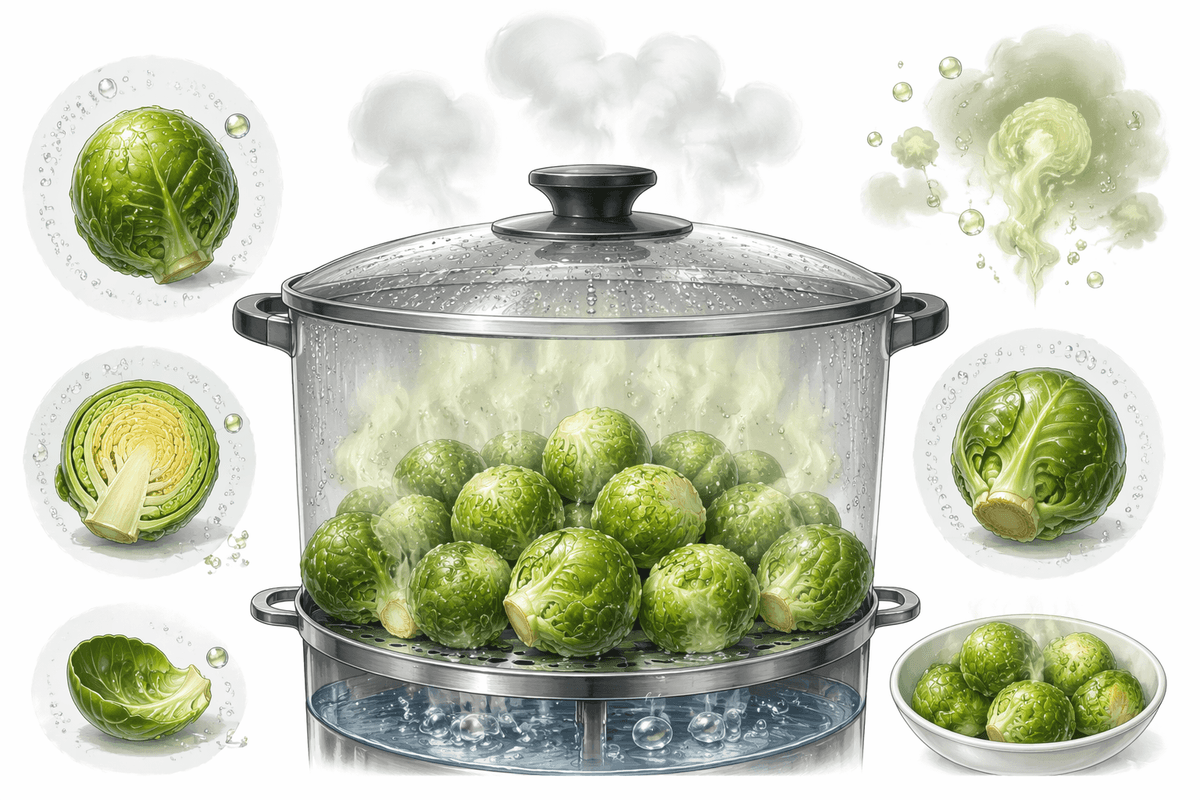
Sometimes the sprouts feel “done” early—knife slides in, leaves look soft, and yet the smell in the kitchen is louder than the flavor on the plate. That’s the steaming trap: the texture signals success, but the taste stays thin, and the lingering cabbage note can make each bite feel heavier than it should.
In a steamer basket, a pot of water, or even a covered skillet, the surface rarely gets truly dry. Moisture keeps the temperature pinned to a gentler, wet heat, so the sprouts tenderize before they can brown. The sulfur compounds that read as sharp and vegetal don’t cook off as easily in that humid environment, so they get trapped around the sprouts instead of dispersing.
It’s also why steamed sprouts can taste oddly bitter and flat at the same time. Without browned edges, there’s no roasted sweetness to buffer the natural bitterness—just softened layers and a green, watery center. If they come out pale, smelling more “boiled” than toasted, it’s usually not your palate being picky; it’s the method doing exactly what it does.
Overcrowding and excess oil cause soggy disappointment
You tip the sprouts into the pan and expect that steady sizzle, but it turns into a damp hiss instead. The pieces look shiny right away, then slowly go limp—more like they’re being warmed than roasted. It’s an easy moment to misread as “needs more time,” when the real issue is that the pan has turned into a little greenhouse.
Overcrowding traps the water the sprouts release as they heat, and that trapped moisture keeps the surface from drying. Instead of browning on the cut sides, they steam each other in the tight space, and the aroma leans back toward cabbage. Excess oil can create a similar disappointment: the sprouts fry gently in a slick, staying soft because the oil blocks direct contact and slows evaporation.
The practical tells are hard to ignore once you notice them: a pan that looks glossy-wet, pale cut faces, and edges that never get crisp. When that happens, the bitterness and sulfur notes don’t necessarily increase—you just lose the toasty, sweet layer that normally keeps them in check.
Seasoning timing: salt, acid, and umami layering
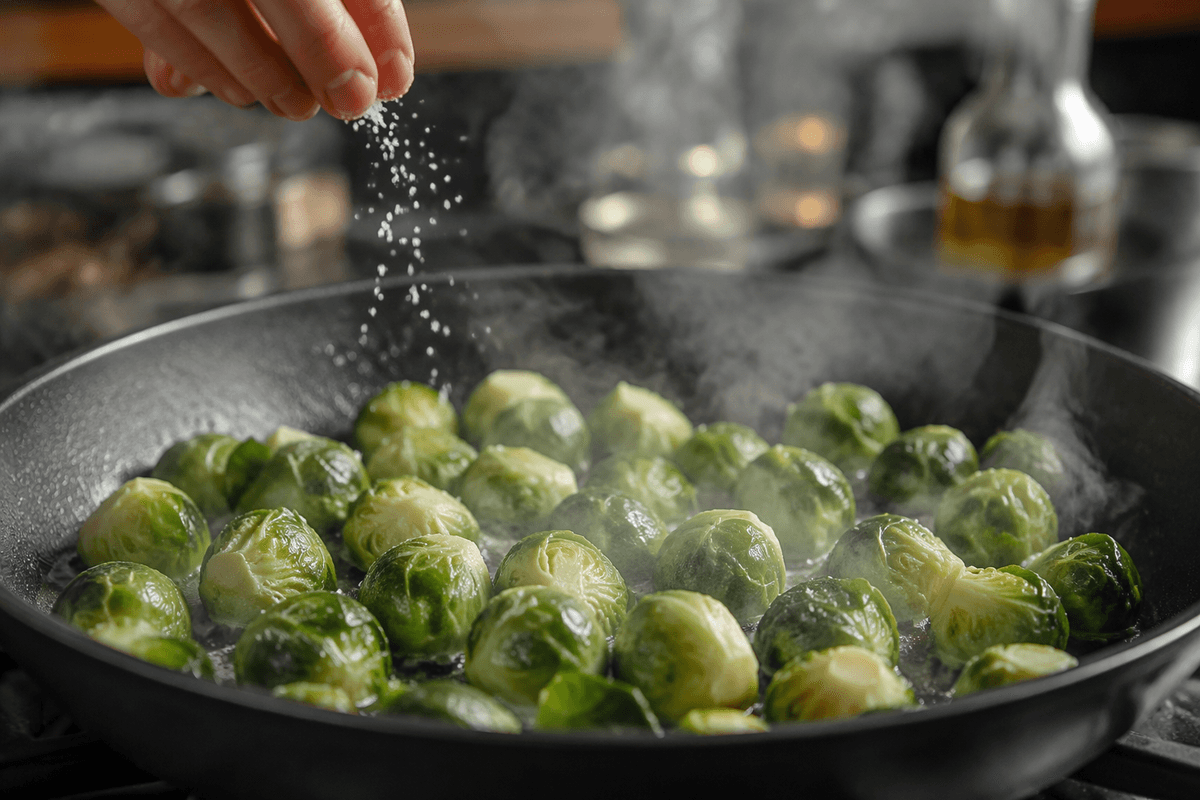
The first sprinkle of salt can feel like it disappears. You taste a sprout right out of the pan, it’s browned, but the flavor still seems oddly “green,” and it’s tempting to keep salting until it suddenly tastes harsh. Part of the confusion is timing: salt on a wet surface pulls out more moisture, and moisture is exactly what keeps that toasted, nutty layer from building.
Once the cut sides have browned and the edges feel a little crisp, salt starts acting more like a highlighter than a fixer. It clings to the rough, roasted spots and makes the sweetness more obvious, which can make the bitterness feel quieter without actually “removing” it. If you salt too early in the process, you may end up with tender sprouts that still smell a bit cabbagey because they never got fully dry on the surface.
A squeeze of lemon or a splash of vinegar early on can brighten, but it can also lock in that sharper brassica note if the sprouts haven’t browned yet. Added at the end, acid tends to taste cleaner—more like contrast against roast—while a little umami (parmesan, miso, fish sauce, toasted nuts) fills in the middle so the sprouts don’t rely on bitterness as their main “flavor.”
Texture choices that make Brussels sprouts feel ‘better’
The bite is often where people decide they “don’t like” sprouts—less the taste than that soft, slightly squeaky chew. Halves can stay a little dense in the center even when the outside browns, so you get a mixed message: crisp edges, then a wet, tight middle. It’s easy to blame bitterness when it’s really texture fatigue.
Changing the shape changes how moisture escapes. Shredded sprouts behave more like a slaw in a hot pan: more surface area, faster drying, quicker browning, and fewer trapped sulfur notes. Smashed or loosened leaves tend to frizzle at the edges, which adds crunch and a toasted smell that makes the “cabbage” aroma harder to notice.
One pan gives crisp, lacy bits, the next turns soft if it’s even slightly crowded. When the edges look dry and bronzed, the whole vegetable tends to feel more forgiving.