Your real NYC choice is pace, not places
At 8:42 a.m. in Bryant Park, I paused with my phone hovering over a color-coded map of “can’t miss” pins, and the screen looked more crowded than the lawn. The temptation was to treat NYC like a checklist—Top of the Rock, MoMA, SoHo, the Bridge, Chinatown—because they’re all “right there” on the grid. But the moment you add real time (security lines, crosswalk waits, a wrong subway entrance), the map stops being a plan.
Your real first-trip decision is pace: do you want a “two icons per day” rhythm, or a “one anchor + wandering” rhythm? The fast version works if you’re energized by motion and don’t mind eating at 3 p.m. because you got stuck in a museum queue; it fails fast if you’re the type who needs coffee breaks and gets cranky in crowds. The slower version gives you better meals and fewer transit mistakes, but you’ll have to accept skipping some famous stuff without negotiating with yourself all night.
For four full days on $200–$300/day, aim for one paid anchor daily (observatory, museum, show) and treat everything else as flexible. If your spreadsheet has three timed entries before dinner, it’s not ambitious—it’s fragile. Pick a pace you can repeat on day three, then let your “must-dos” compete for those anchor slots.
Pick dates that match your energy

At 11:57 p.m., I watched the hotel prices jump as I toggled a Tuesday arrival to a Friday one, and my spreadsheet suddenly looked optimistic. The dates weren’t just cheaper or pricier—they were telling me what kind of city I’d be walking into. NYC on a crisp midweek morning feels like you can “keep up”; NYC on a sticky Saturday afternoon can make the same itinerary feel like a crowded obstacle course.
If you want icons without the constant shoulder-to-shoulder shuffle, weekdays are your friend: museums, observatories, even bagel lines tend to move with less drama Tuesday–Thursday than on weekends. Some late-night energy and street-fair randomness is heavier Friday–Sunday, which can be fun if you’re fueled by noise and don’t mind slower sidewalks. Summer adds its own tax—heat plus surprise storms—so outdoor-heavy plans (bridge walks, long park loops) work better early morning; winter rewards indoor anchors but punishes you if your “wandering time” assumes you’ll happily roam for three hours after dark.
For four full days, pick dates that protect day three: that’s when transit mistakes and museum fatigue usually show up. If you’re flying in, arriving the evening before day one is often worth more than squeezing an extra half-day—especially if your first morning includes a timed ticket. Choose the version of NYC you can repeat, not just survive.
Choose a home base you’ll actually use
At 6:18 p.m., I stood on the wrong side of Atlantic Terminal with a tired phone battery and a shopping bag I didn’t need, realizing my “cheap Brooklyn deal” came with a nightly logistics quiz. The hotel looked great on the booking page; the walk to the right train platform didn’t. It wasn’t unsafe or dramatic—just inefficient in a way you only notice when your feet are done for the day.
Your home base is less about vibes and more about how often you’ll actually reset there. If you’re doing the classic first-timer stack (Midtown icons, Central Park, a museum, maybe a show), staying in Midtown/Times Square/Hell’s Kitchen is boring but brutally effective: you’ll waste fewer minutes on transfers, and popping back for a shower before dinner is realistic. The trade-off is price and sleep quality—thin walls, sirens, and elevators that feel like rush-hour even at 10 p.m. If you’re sensitive to noise, a “central” hotel can cost you recovery.
Brooklyn can work on a mid-range budget, but only if it’s functionally close: think areas with simple Manhattan access (one line, minimal transfers) like Downtown Brooklyn, Brooklyn Heights, or Williamsburg near the Bedford L stop. It doesn’t work as well if your plan is heavy on early timed entries—an extra 20–30 minutes each way sounds small until it’s day three and you’re deciding between a nap and a reservation. Pick the base that makes your evenings easy, not just your spreadsheet pretty.
Build days around one borough at a time
At 1:26 p.m., I was wedged into an R train car at Canal Street, staring at a screenshot that said “14 min” while the platform clock kept crawling. I’d tried to “just hop” from a Lower Manhattan lunch to a museum uptown because the map made it look clean. In real life, one missed express/local choice turned a simple cross-city move into a sweatier, slower detour.
The fix is boring and effective: build each day around one borough, with one anchor neighborhood and a nearby “spill zone.” Manhattan days work best when they’re stacked vertically (Downtown or Midtown or Upper Manhattan) rather than ping-ponging between them; it’s the difference between 12 minutes on foot and 45 minutes underground plus transfer roulette. This approach is less “max sights,” more “max momentum,” and it especially works if you hate feeling lost in stations or you’re trying to make a dinner reservation without sprinting.
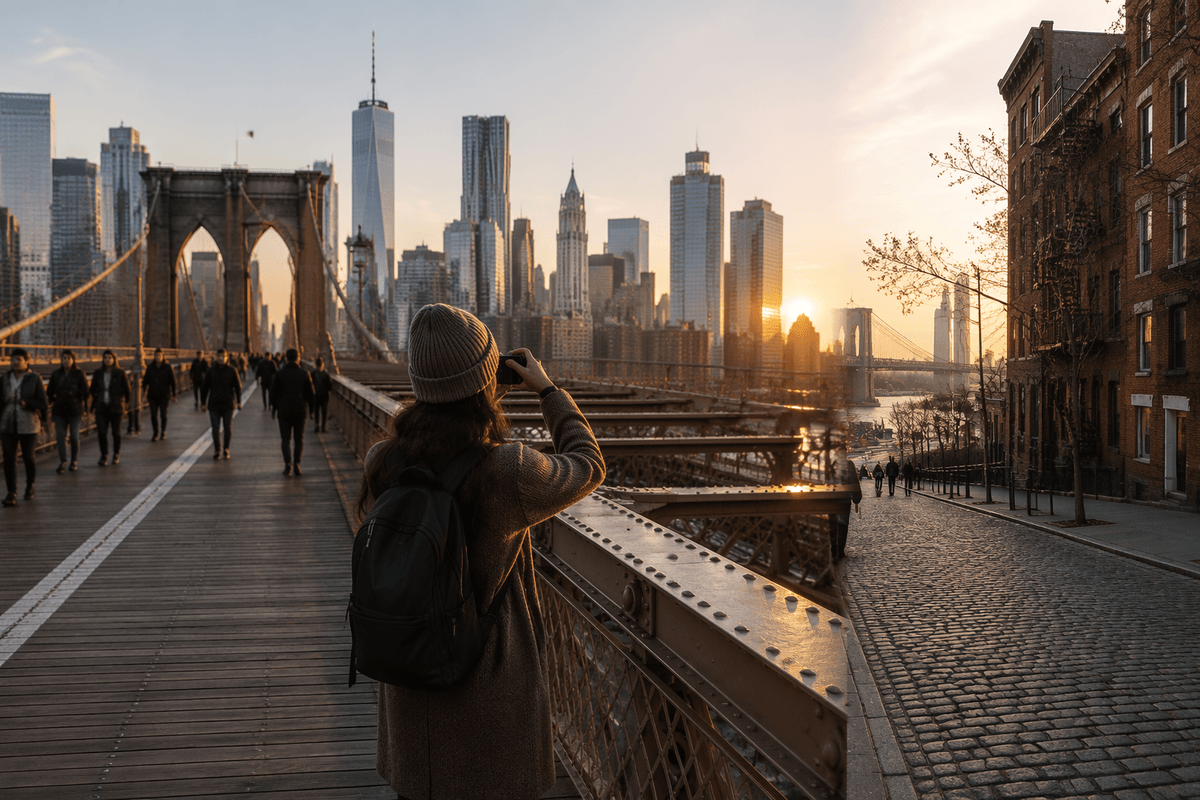
Brooklyn and Queens reward the same logic, but the trade-off is commitment: once you’re out there, don’t keep one eye on Times Square. A Brooklyn day can be Dumbo/Heights/park time with a long dinner, not “Brooklyn Bridge, then Midtown, then back for pizza.” If you’re chasing iconic photos, do the bridge walk early when crowd flow is calmer; if you’re chasing food, cluster meals so you’re not arriving hungry after two transfers and a 10-block “it’s only a short walk.”
The best first trip plan in three days
At 7:14 a.m., I watched my “Day 1” cells turn red because the museum slot I wanted was suddenly 2:30 p.m., and my whole morning hinged on it. That’s when the three-day version of NYC became useful: not “everything,” just a spine that still works if one ticket time shifts. It’s tighter than a four-day plan, but it shows you where the hours actually go.
Day 1 (Midtown + Central Park edge): pick one paid icon you’ll remember—Top of the Rock or SUMMIT—then stay vertical: Fifth Ave, Bryant Park/Grand Central, and a short Central Park loop instead of crisscrossing to SoHo “because it’s close on the map.” This is the day that rewards early starts; the trade-off is you’ll feel like you “should” add a second big attraction, but that’s how you end up eating dinner at 10 p.m. out of exhaustion.
Day 2 (Downtown + Brooklyn commitment): do Statue/9-11/Wall St as your anchor (choose one timed entry, not all three), then walk across the Brooklyn Bridge early and keep going to DUMBO/Brooklyn Heights for food with less Midtown friction. Day 3 (Upper West Side + museum): AM museum (Met or AMNH), then Central Park wandering and an easy dinner near your line home—less iconic density, more recovery. With a fourth day, don’t “finish the list”; repeat the neighborhood that felt easiest to move through.