Why Singapore surprises first‑timers
I hesitated over my first Singapore day because the “obvious” plan (Marina Bay, Gardens by the Bay, Sentosa) looks neat on a map but can eat half your trip in transit lines, ticket queues, and heat management. What surprised me fastest wasn’t one attraction—it was how quickly a good day falls apart if you treat Singapore like a checklist city instead of a clusters-and-timing city.
Singapore feels ultra-efficient right up until it doesn’t: midday humidity turns a 15-minute walk into a slow slog, and the most photogenic spots peak exactly when you’re least comfortable. The flip side is that air-conditioned escapes (MRT links, malls, museums, hawker centres) are so integrated that you can “reset” your day without losing hours—if you plan for that rhythm instead of fighting it.
First-timers also underestimate how curated some highlights are. That’s not a criticism—it just means you’re paying for polish and views, so you’ll want to be picky: book the one or two ticketed experiences you’ll actually linger in, and keep the rest flexible so you can dodge crowds when the city inevitably nudges your schedule.
Pick your base: neighborhoods and vibes
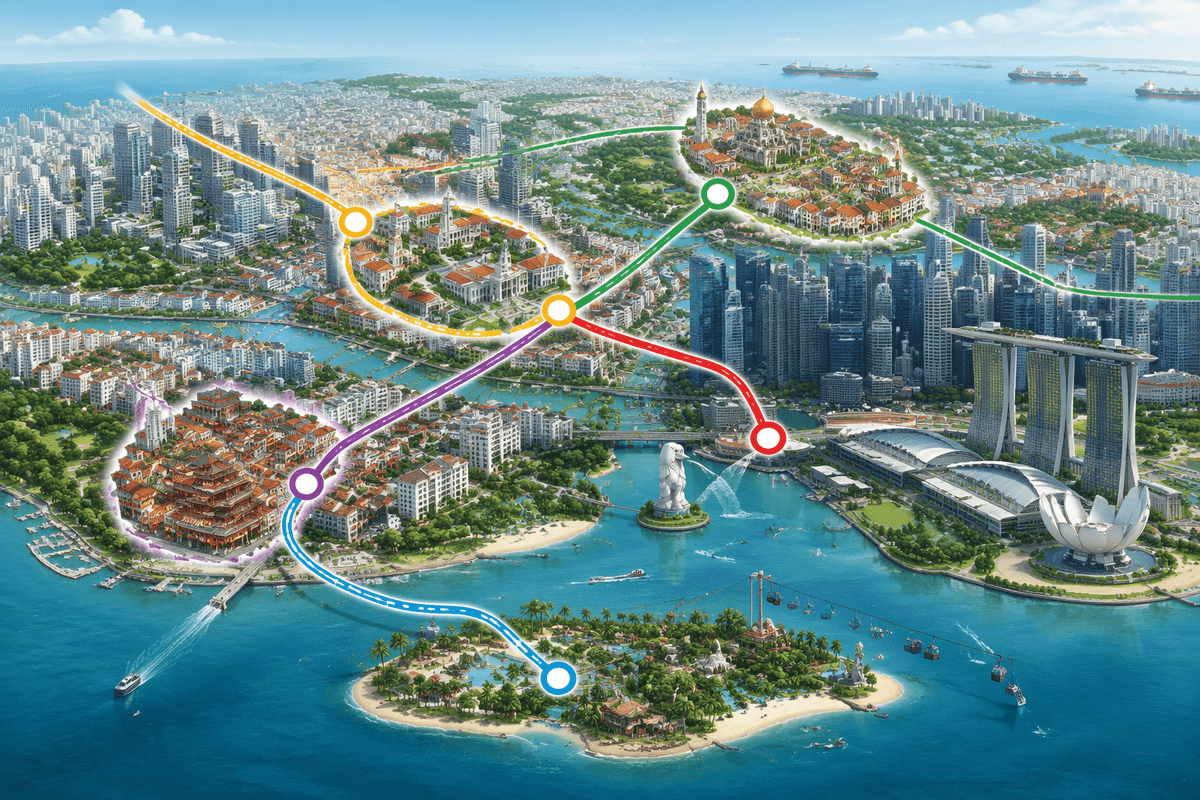
The first decision that actually saved me time wasn’t a ticket—it was where to sleep. If you want the “postcard” version on your doorstep, Marina Bay/Downtown is unbeatable for dawn and late-night walks, but you’ll pay more and the area can feel a bit corporate once the show crowds thin out.
For a mid-range, do-most-things base, I’d look at Bugis/City Hall or the edge of Kampong Glam: you’re MRT-central, close enough to Marina Bay without living inside it, and you can bail into air-conditioning fast when the afternoon turns sticky. The compromise is nightlife noise in pockets, and some hotels skew compact.
Chinatown/Outram works if food is your priority—hawkers and bars are easy—but it’s less “iconic skyline” outside certain angles. I’d only base on Sentosa if your trip is mostly beaches; otherwise, the extra hops start to feel like sand in the gears.
Signature skyline icons you can’t miss
My first real “Singapore moment” was realizing Marina Bay looks best before the city wakes up: I hit the waterfront around 7 a.m., when the heat was still negotiable and the paths weren’t a slow-moving photo line. If you only have time for one skyline loop, do the Bayfront–Helix Bridge–Merlion–Esplanade circuit on foot; it’s free, it’s compact, and it gives you clean angles without committing to ticketed queues. Midday, the same walk can feel longer than it is—sun glare, humidity, and construction detours turn “quick” into tedious.
The one splurge I’d actually consider booking is an observation deck (Marina Bay Sands SkyPark or Singapore Flyer), but only if you’re picky about views and timing. SkyPark is iconic but can feel rushed when it’s packed; the Flyer is slower and calmer, but the experience is more “contained” than rooftop-dramatic. Either way, go late afternoon into sunset on a clear day—just know that’s peak demand, so pre-booking saves time even if it costs flexibility.
At night, the Marina Bay light shows are easy wins because they’re walk-up, but they also attract shoulder-to-shoulder crowds. I had a better time watching from the edges (near the Helix Bridge) where you trade perfect center framing for breathing room and a faster exit back to the MRT.
Eat like a local: hawkers to high‑end
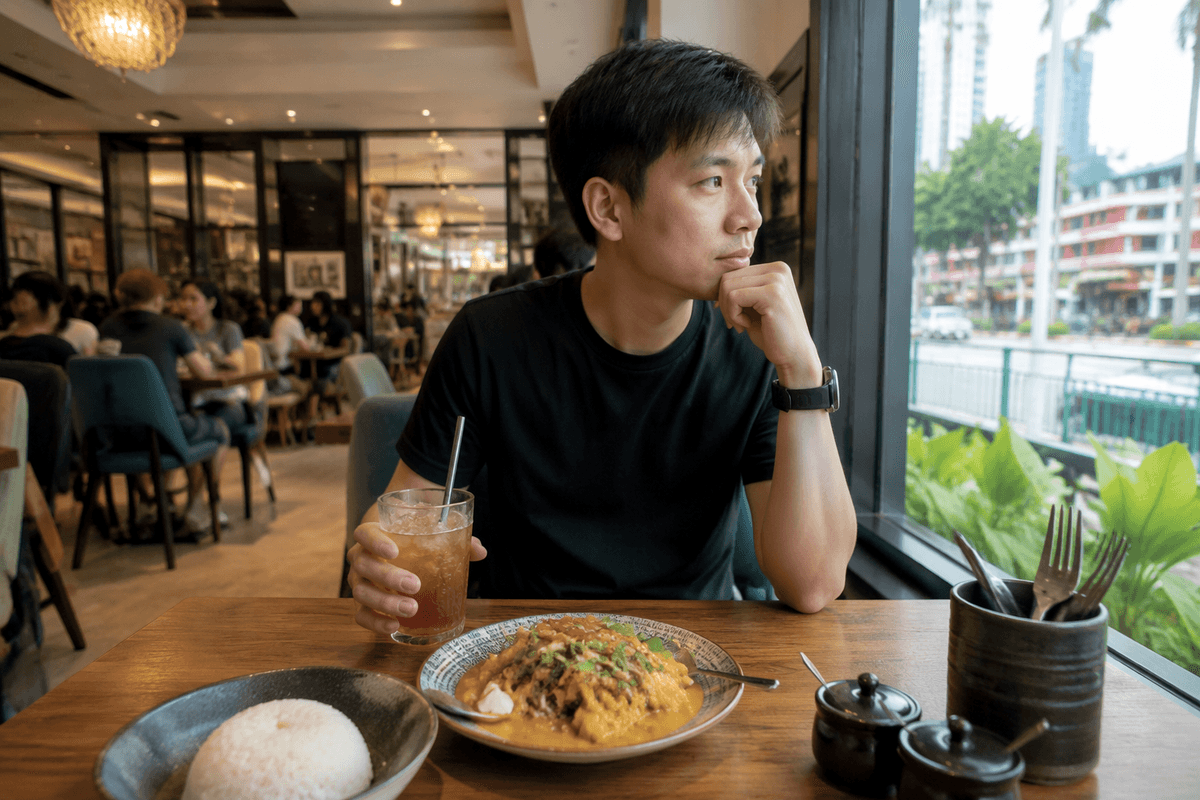
I kept telling myself I’d “just grab a quick hawker meal,” and then lost 40 minutes circling for a table with my tray hovering like a negotiation. Hawker centres are absolutely the local baseline—but at peak lunch (roughly noon to 1:30), the friction is real: lines stack, seats vanish, and you end up eating faster than you meant to. If you can swing it, go early (11-ish) or late (2-ish) and it feels like a different city: calmer, cooler, and easier to sample two or three stalls without turning it into a military operation.
My best mid-range pattern was hawker for one “anchor” meal a day (Maxwell, Lau Pa Sat, Old Airport Road) and then one air-conditioned sit-down that doubles as a break. The time cost is higher, but it buys you pacing—especially if you’re doing Marina Bay or Bugis afterward and don’t want the afternoon to dissolve into heat fatigue. If you want one high-end Singapore moment, book it (weekends disappear), but keep it for a night when you’re already near Downtown/Marina Bay so the commute doesn’t eat the glow.
Green Singapore: gardens, parks, and waterfronts
I tried to “tack on” greenery between skyline stops and learned fast that Singapore’s parks aren’t filler—they’re schedules. Gardens by the Bay works best as an early-evening block: the outdoor gardens are free-ish and breezy after 5, but the cooled conservatories are paid and can swallow 2 hours if you’re the type who reads every plaque.
If you want a no-ticket win, the Singapore Botanic Gardens is the easiest reset: MRT-close, shaded, and forgiving if you’re tired. The trade is that it’s less cinematic than Marina Bay—more lived-in than wow-factor—so it’s ideal on a midday lull when you’d otherwise hide in malls.
For waterfront time, I preferred a simple Marina Bay promenade loop over chasing far-flung parks. East Coast Park is great, but it’s only worth the transit if you’ll actually linger (bike, beach, long dinner); otherwise it quietly eats one of your limited 3–5 days.
Tie it together: your personal Singapore must‑dos
On my last night, I stopped trying to “cover Singapore” and instead picked three anchors that actually fit a 3–5 day pace: one Marina Bay skyline loop at dawn or after dark (walk-up, flexible), one ticketed view or conservatory block that I pre-booked (less spontaneity, fewer queues), and one hawker meal timed off-peak so eating didn’t become the activity.
If you’re deciding what to skip, use a simple test: anything that requires two lines (ticket + transit) has to earn a half-day; everything else should stay modular. Build days by area—Downtown/Marina Bay together, Bugis/Kampong Glam together—and leave one midday “reset” slot for air-conditioning, because humidity is the sneaky budget you’ll actually run out of.